The Ghost in the Machine: When Celebrity Stand-Ins, Ghostwriters, and Body Doubles Accidentally Became the Main Character
Hollywood has always run on a kind of shared fiction. The star is the face. The brand. The thing you pay to see. But behind that face? There's frequently a whole ecosystem of talented, underpaid, and deliberately uncredited humans making the magic happen — and staying very, very quiet about it.
Ghostwriters who craft the memoirs. Social media managers who are the celebrity's voice for millions of followers. Body doubles who stand in for everything from dangerous stunts to press photos. Vocal coaches who are, let's be honest, doing a little more than coaching. AI voice clones that are starting to blur lines nobody even knew existed yet.
For the most part, this machinery hums along invisibly. Until it doesn't.
The Milli Vanilli Problem Never Actually Went Away
Let's acknowledge the original sin of celebrity stand-in scandals: Milli Vanilli. In 1990, the duo was stripped of their Grammy Award after it emerged that they had not performed the vocals on any of their recordings — the voices belonged to entirely different singers. It remains one of the most dramatic unmasking events in music history, and it set a cultural template for the anxiety that still lives under every "Is it real?" conversation about celebrity performance.
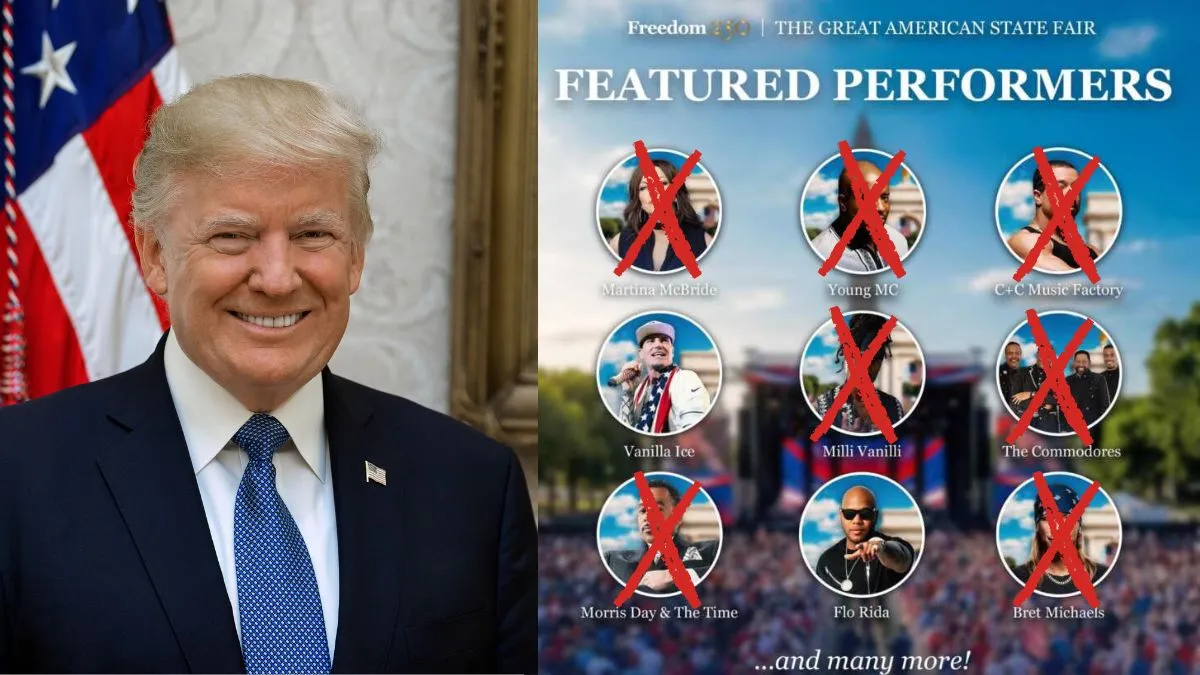 Photo: Milli Vanilli, via www.ticketnews.com
But here's the thing: the industry didn't exactly learn its lesson. It just got more sophisticated about hiding the seams.
Lip-syncing at live performances remains a persistent and largely unspoken norm across pop music, particularly in large-scale arena and stadium tours where the production complexity makes fully live vocals genuinely difficult. Most fans understand this on some level. The controversy ignites when the gap between the performance of authenticity and the reality of it becomes impossible to ignore — like Ashlee Simpson's now-legendary 2004 Saturday Night Live incident, when the wrong vocal track started playing mid-performance and she responded by doing what can only be described as a hopeful little hoedown before walking offstage. The moment became a GIF before GIFs were even a cultural currency.
 Photo: Ashlee Simpson, via people.com
The Ghostwriter in the Room
In publishing, the ghostwriter is an almost entirely normalized institution. Political memoirs, celebrity biographies, business books — the majority of them are written by someone whose name doesn't appear on the cover. The celebrity provides the stories, the access, and the name recognition. The writer provides the actual sentences. Everyone moves on.
Except when they don't.
The music industry's complicated relationship with ghostwriting is a different beast entirely, because songwriting credits carry both financial weight (royalties) and cultural cachet (authenticity). The "did they write it themselves" question is weaponized constantly in hip-hop in particular, where the mythology of the self-made lyricist is foundational to credibility.
Drake's long-running feud with Meek Mill exploded in 2015 in large part because Meek publicly alleged that Drake used ghostwriters — specifically naming Quentin Miller as a collaborator on If You're Reading This It's Too Late. Drake never fully denied the collaboration, instead reframing it as standard industry practice. The beef became one of the most analyzed rap feuds of the decade, with the ghostwriting allegation at its center. Per reporting from Rolling Stone and Complex, the incident reshaped conversations about creative authenticity in hip-hop in ways the genre is still working through.
 Photo: Drake, via i.dailymail.co.uk
Social Media Managers: The Real Celebrities We Never Knew
Here's where things get genuinely strange in the modern era: the person running your favorite celebrity's Twitter, Instagram, or TikTok might have more influence over public perception than any publicist, stylist, or manager on the payroll.
Social media managers are hired to disappear — to write, post, and engage as if they are the celebrity, building intimacy with millions of followers through a voice that is, at best, collaborative, and at worst, entirely fabricated. The best ones are so good that fans feel like they have a genuine personal connection with a star they've never met.
Occasionally, though, the mask slips. In 2022, the social media account for the fast food chain Duolingo went viral for a behind-the-scenes TikTok that revealed just how constructed the brand's "unhinged" persona actually was — and while that's a brand rather than a celebrity, it illustrated perfectly how the authenticity that drives engagement is often the most carefully engineered thing of all. Several celebrity social media managers have gone on record (anonymously, always anonymously) with publications including The Cut and Wired describing the experience of essentially being a celebrity online while the actual person rarely, if ever, reviews the content.
The AI Frontier: When the Stand-In Isn't Even Human
If ghostwriters and body doubles represent the analog era of celebrity proxies, AI voice cloning is the current frontier — and it's moving faster than the legal and ethical frameworks can keep up with.
In 2023, a viral track purportedly featuring the voices of Drake and The Weeknd — entirely AI-generated — racked up millions of streams before being pulled from platforms. Universal Music Group sent takedown notices and issued a statement calling it an "assault on human creativity." The artists themselves were not involved in its creation in any way. Per reporting from The Verge and Billboard, the incident accelerated ongoing industry conversations about AI protections in music contracts and the legal status of voice likeness rights.
The unsettling implication: the stand-in no longer needs to be a person. The ghost in the machine might not be a person at all.
What the Curtain Reveals
Every one of these incidents — the lip-sync fail, the ghostwriting beef, the rogue social media post, the AI clone — tells the same underlying story: fame is, and has always been, a collaborative construction. The celebrity is the product. The team is the factory. And when the factory floor becomes visible, it doesn't necessarily diminish the product — but it does force a reckoning with what we were actually buying.
The fans who feel betrayed by these revelations are reacting to a broken promise of authenticity that was, in many cases, never actually made. The fans who shrug and move on understand, perhaps more clearly, that entertainment is a performance — and the performance includes the performance of being real.
The Flashbulb Takeaway
The next viral celebrity moment you see — the perfectly worded clapback, the emotionally resonant Instagram caption, the surprisingly self-aware TikTok — ask yourself: who actually wrote that?
Not to be cynical. Just to be clear-eyed about the fact that modern celebrity is a team sport, even when it's sold as a solo act.
With AI voice technology advancing at its current rate, the question of 'who is actually performing' might get a lot more complicated — and a lot more legally interesting — before it gets any simpler.