From Petty to Plaintiff: When Celebrity Beef Stops Being Fun and Starts Costing Millions
There's a moment in every celebrity feud — usually around the third subtweet or the second diss track — where it stops being fun and starts being something an entertainment lawyer has to explain to a judge. We've all watched it happen in real time: what begins as deliciously messy public shade evolves, with alarming speed, into a defamation filing, a trademark dispute, or an intellectual property war that consumes years, millions of dollars, and whatever goodwill both parties had left.
The celebrity beef-to-lawsuit pipeline is not new. But it is accelerating. And the reason, according to the entertainment attorneys who end up handling the fallout, is almost always the same: famous people consistently underestimate how legally expensive it is to keep a fight public.
How a Feud Becomes a Filing
The anatomy of a celebrity lawsuit that starts as beef usually follows a recognizable progression. It begins with something that feels low-stakes — a cryptic Instagram caption, a lyric that sounds suspiciously specific, an interview answer that a publicist probably advised against. The other party responds, either directly or through their own cryptic content. The internet takes sides. The discourse intensifies. And then someone — or someone's legal team — decides that the line between entertainment and actionable harm has been crossed.
Defamation is the most common legal avenue when celebrity feuds go judicial. To establish defamation in the US, a plaintiff generally needs to show that a false statement of fact was published to a third party and caused reputational harm. For public figures, the bar is higher — they typically need to demonstrate "actual malice," meaning the statement was made knowing it was false or with reckless disregard for whether it was true. But "higher bar" doesn't mean "impossible," and plenty of celebrities have discovered this the hard way.
"What people forget is that there's a difference between opinion and fact," explains one entertainment litigator who has worked on several high-profile cases. "Saying someone is a bad person? That's probably opinion. Saying someone did a specific thing that they didn't do, in a way that sounds like a factual claim? That's where you start building a case."
The Lyric Problem
Music has always been a vehicle for settling scores, and the law has generally given artists significant latitude to express themselves creatively. But the latitude has limits, and the history of celebrity feuds is littered with lyrics that tested them.
The central legal question with diss tracks and pointed song references is whether a reasonable listener would interpret the content as a statement of fact or as artistic expression. Courts have historically leaned toward protecting artistic expression, but that protection erodes when the content is specific, when it's presented in a context that blurs the line between fiction and accusation, or when it's accompanied by other statements — social media posts, interviews, public comments — that reinforce a factual interpretation.
The Drake and Kendrick Lamar feud of 2024 generated enormous public discourse around exactly this question. Both artists made pointed claims in their diss tracks, and legal observers spent weeks analyzing which lines, if any, crossed from creative shade into potentially actionable territory. No lawsuits materialized from that particular exchange — but the conversation it sparked about the legal boundaries of the diss track format was genuinely illuminating. The general consensus among entertainment lawyers who weighed in publicly: the more specific and factual a lyrical accusation sounds, the more legal exposure the artist assumes.
The Social Media Acceleration Problem
If music is the traditional vehicle for celebrity beef, social media is the gasoline. And the problem with gasoline is that it doesn't care what you intended to set on fire.
A shady Instagram caption takes seconds to post and potentially years to litigate. The speed and permanence of social media has fundamentally changed the legal calculus of celebrity feuds, because every post is timestamped, archived, and potentially discoverable in litigation. Celebrities who would never make a specific accusation in a formal interview will post something on Instagram at 2 a.m. that says essentially the same thing with enough plausible deniability baked in — and then be genuinely surprised when a lawyer explains that the deniability isn't as plausible as they thought.
"Screenshots are forever," says one entertainment attorney bluntly. "I've had clients who deleted posts thinking that solved the problem. It doesn't. The internet already has it. The other side already has it. Deleting it sometimes actually makes things worse because now you've demonstrated consciousness of the problem."
The case of Cardi B and Tasha K is instructive here. Tasha K, a YouTuber, made a series of specific claims about Cardi B over an extended period — claims that went well beyond opinion into specific factual allegations. In 2022, a jury awarded Cardi B approximately $4 million in damages. The case was a significant moment in the celebrity beef-to-lawsuit conversation because it demonstrated that the "it's just gossip" defense has real limits when the content is specific, repeated, and demonstrably false.
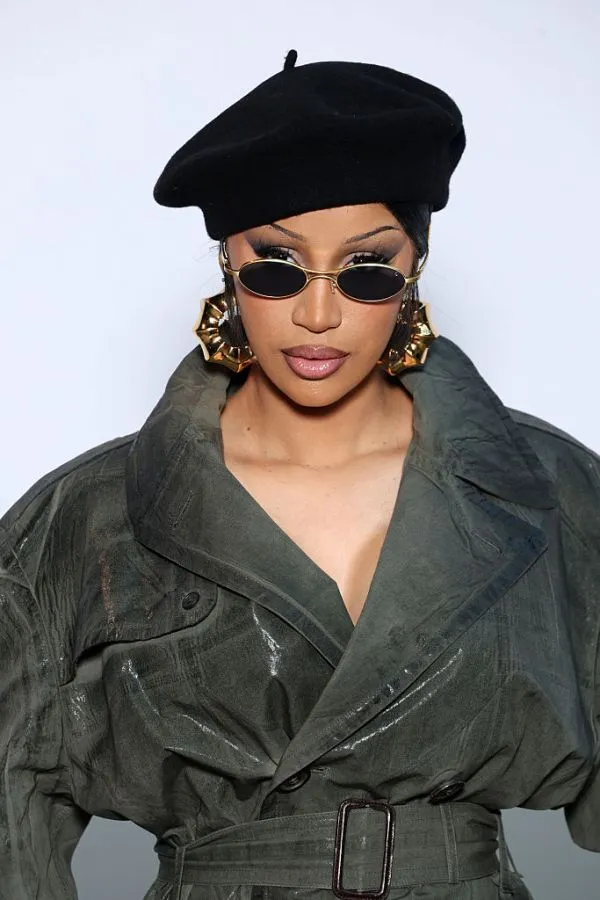 Photo: Cardi B, via hellobeautiful.com
Trademark Battles and the IP Wars
Not all celebrity legal disputes are defamation cases. An increasingly common category involves intellectual property: trademarks, brand names, and creative ownership disputes that arise when two famous people — or a famous person and a company — end up in conflict over who owns what.
Taylor Swift's long-running battle over ownership of her masters is the most prominent recent example of how IP disputes can become defining public narratives. While that situation involved a contract dispute rather than a traditional feud, it demonstrates how questions of creative ownership can generate as much cultural heat as any personal beef — and how the legal resolution (or lack thereof) shapes both parties' public images for years.
More traditional trademark battles arise when celebrities launch businesses in similar spaces and their branding overlaps — or when a celebrity's name, likeness, or signature phrase ends up being claimed by someone else. Rihanna's Fenty brand has been involved in trademark disputes across multiple markets. Kim Kardashian's SKIMS has navigated IP challenges. In almost every case, the legal costs are substantial and the reputational spillover is unpredictable.
What Celebrities Consistently Get Wrong
Entertainment lawyers who handle these cases identify a consistent set of miscalculations that celebrities make when feuds go public.
The first is the belief that fame confers legal protection. It doesn't. Being famous means more people are watching, which means more potential witnesses to whatever you said or did. It's an aggravating factor, not a shield.
The second is the assumption that what plays well on social media will play well in court. These are completely different audiences with completely different standards. A clap-back that gets two million likes is not a legal defense.
The third — and perhaps most expensive — is the failure to stop. Once a feud has crossed into legally sensitive territory, the instinct to keep responding, keep posting, keep engaging is almost always counterproductive. Every new post is potentially new evidence. Every new interview is potentially a new statement that needs to be defended.
"The most common advice I give clients is also the hardest for them to follow," says one entertainment litigator. "Stop talking. Just stop. The feud will survive without your input. The lawsuit won't get better if you keep feeding it."
What to Watch For
The celebrity legal landscape is always populated with active disputes that haven't yet made major headlines — trademark filings, cease-and-desist letters, and pre-litigation negotiations that happen well below the public radar. By the time a lawsuit becomes news, it's usually been in motion for months.
The feuds most likely to escalate legally are the ones where specific factual claims have been made publicly, where significant money or brand equity is at stake, and where at least one party has a legal team that's aggressive about protecting their client's interests. Which, in Hollywood, is most of them.
The beef is always entertaining. The billing hours, significantly less so.
Somewhere right now, a celebrity is drafting a tweet that their lawyer is going to spend the next eighteen months trying to explain — and the meter is already running.