The Role That Was Never Up for Grabs: How Hollywood's Biggest Jobs Get Quietly Assigned Before Anyone Else Gets a Shot
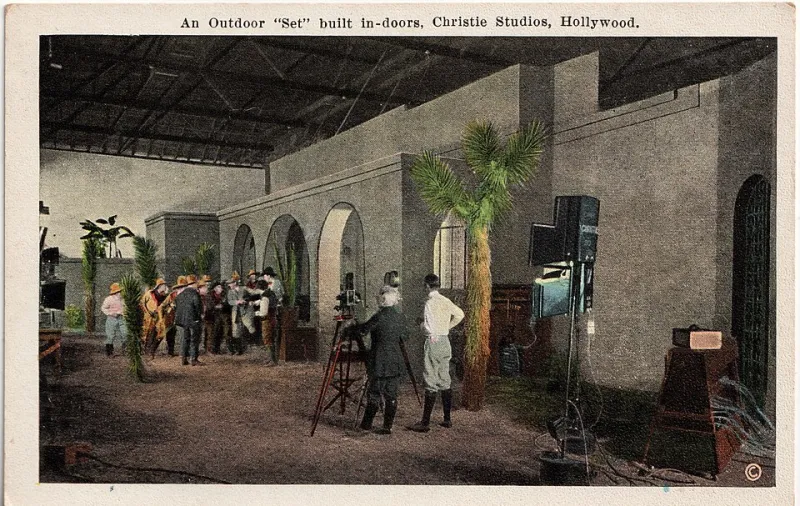
Photo: Glen G. Stone, Public domain, via Wikimedia Commons
Let's play a game. Think of the last five major blockbuster announcements that made headlines. Now ask yourself: were you genuinely surprised by any of those casting choices? Or did each one land with the specific energy of something that was always going to happen—a foregone conclusion dressed up as a decision?
If it's the latter, congratulations. You've just intuited one of Hollywood's most durable open secrets: the biggest roles in the industry are frequently not cast so much as assigned, through a web of relationships, agreements, and informal understandings that operate entirely outside the public-facing audition process.
Welcome to the quiet casting pipeline. Population: the same thirty names, rotating.
What 'Going Out for a Role' Actually Means at the Top
For working actors below a certain tier, the casting process is exactly what it looks like from the outside. You get a breakdown from your agent, you self-tape or go in for a room read, you wait, you hear nothing, you repeat. It is humbling, competitive, and largely meritocratic in the sense that the most prepared person in the room has a genuine shot.
For A-listers? The process is almost unrecognizable.
"By the time a major studio role is announced publicly, the decision has usually already been made—or the shortlist is so short it's functionally a decision," says one casting director with two decades of experience on studio productions, speaking on background. "The announcement is for the press. The conversation happened six months ago over dinner."
This isn't conspiracy—it's infrastructure. Studios build long-term relationships with major talent through first-look deals, overall deals, and production partnerships that give certain actors and their teams early access to material that hasn't been announced, pitched publicly, or in some cases even fully written.
The First-Look Deal: Hollywood's Most Powerful Invisible Handshake
If you want to understand how the quiet casting pipeline works, start with first-look deals.
A first-look deal is a formal agreement between a studio and a production company—often owned by or attached to a major celebrity—that gives the studio the right to review and potentially acquire any project that company develops before it goes elsewhere. In exchange, the studio typically provides office space, development funding, and a direct line to the greenlight process.
For the celebrity at the center of that production company, this arrangement means something very specific: their projects don't go through the same door as everyone else's. They go through a private entrance.
Reese Witherspoon's Hello Sunshine, Ryan Reynolds' Maximum Effort, and similar celebrity-owned production entities have formalized this dynamic in ways that are publicly documented and legally above board. What's less discussed is how these arrangements effectively create a casting pipeline where the celebrity-producer is the logical, expected, often predetermined choice for the leading role in projects they've developed.
It's not nepotism in the traditional sense. It's structural advantage operating at scale.
The Agent Network: Where Roles Actually Get Cast
Below the studio level, the role of talent agencies in shaping casting before it becomes public is enormous and almost entirely invisible to audiences.
The major agencies—WME, CAA, UTA—represent not just individual actors but directors, writers, producers, and in many cases the studios themselves through consulting relationships. This means that when a major project is being packaged, the agency often already knows which of their clients are attached or being considered before any public announcement is made.
Packaging—the practice of assembling a project's key elements (director, lead actor, sometimes writer) through a single agency before selling it to a studio—has been a dominant force in Hollywood for decades. The Screen Actors Guild-AFTRA and the Writers Guild of America have both pushed back against packaging fees in high-profile disputes in recent years, arguing that the practice creates conflicts of interest that disadvantage working talent.
But from a pure access standpoint, what packaging means is this: if your agent isn't in the room where the package is being assembled, you are not being considered for the role. It was never going to be you.
The 'Offer Only' Tier: When Auditions Aren't Even a Courtesy
At the very top of the industry food chain, there is a category of talent that operates on what the industry calls "offer only" status. These are performers—typically established stars with significant box office or streaming track records—who do not audition. Ever. For anything.
For a studio, making an offer to an offer-only talent is itself a signal. It says: we are serious about this project, we have the budget to attract genuine stars, and we are not wasting anyone's time with a process. For the talent, it says: we want you specifically. No competition, no uncertainty.
The practical effect of this system is that a significant portion of the most visible, most lucrative roles in Hollywood are never available to actors who haven't already achieved a certain level of visibility—which means the roles that would generate that visibility are also unavailable to them. It's a closed loop dressed up as an open industry.
"The audition system exists and it works," says one talent manager who represents mid-level working actors. "But it's the audition system for certain roles. The really big stuff? That's a different conversation happening in a different building, and most people aren't invited."
What This Means for Everyone Else
The quiet casting pipeline has real consequences for the diversity and dynamism of what ends up on screen. When the same short list of pre-approved names cycles through the biggest roles in the industry, the stories that get told—and the faces that tell them—reflect the relationships and power structures of the people doing the assigning, not the breadth of available talent.
This is not a new observation. It's been made by actors, directors, and industry advocates for years. What's changed is the level of visibility into how the system actually operates, driven partly by the high-profile labor disputes of 2023, which pulled back the curtain on packaging, streaming residuals, and the structural economics of the industry in ways that had previously been industry-insider knowledge.
What to Watch For
The next time a major casting announcement drops and your first reaction is "obviously," sit with that for a second. That feeling of inevitability? It's not a coincidence. It's the system working exactly as designed.
Watch for which celebrities have production deals with which studios. Watch for which agencies are packaging which projects. And watch for which casting announcements come with the kind of breathless "exclusive" framing that suggests the decision was made long before the press release was written.
In Hollywood, the most powerful word isn't 'action'—it's the quiet 'yes' that happened before the cameras were ever set up.