"I Almost Said No" — Sure, Jan: The A-List Habit of Pretending Their Biggest Wins Were Almost Accidents

Picture the scene. A beloved film has just crossed $800 million at the global box office. The star is sitting across from a very enthusiastic interviewer, basking in the glow of a career-defining moment, and then — right on cue — they lean back, tilt their head thoughtfully, and say the words that have become as reliable a feature of the Hollywood press circuit as the branded water bottle on the table between them:
"I almost didn't take it, actually."
The interviewer gasps. The audience at home clutches their pearls. The star smiles modestly and explains how they had doubts, how they weren't sure they were right for the role, how their gut was saying no until — somehow, miraculously — they found the courage to say yes. And now here we all are, grateful for their bravery.
Reader, we need to talk about this.
The Anatomy of the Humble-Brag That Built a Genre
The "I almost passed" interview moment has become so ubiquitous in 2025 that it's practically its own entertainment format. Scroll back through any major press tour from the last three years and you'll find it everywhere — in print profiles, on podcasts, in late-night sit-downs — delivered with varying degrees of conviction by actors, musicians, and public figures who would very much like you to believe that their enormous success was, at its core, a happy accident.
The examples are almost too numerous to catalog. There's the A-lister who claims they read the script for what became a franchise-launching role and "just didn't get it" until a director friend convinced them otherwise. There's the musician who says they wrote their Grammy-winning album "almost as a joke" and were shocked when anyone connected with it. There's the fashion icon who "nearly didn't show up" to the fitting that launched a career-defining brand partnership.
Now: some of these stories are almost certainly true. Creative doubt is real. Imposter syndrome is real. The entertainment industry is genuinely unpredictable, and plenty of stars have made decisions they later reconsidered. We're not here to tell you that ambivalence doesn't exist in Hollywood.
We're here to gently suggest that the frequency with which these stories appear — and the timing of when they're told — might be worth examining.
Why Now? The Relatability Industrial Complex
The "I almost said no" moment didn't emerge from nowhere. It's a product of a very specific cultural moment in which audiences have become increasingly allergic to the perception of unchecked ambition, particularly in celebrities. In an era where hustle culture has been both celebrated and exhaustively critiqued, where the parasocial relationship between fans and famous people has never been more intense or more emotionally loaded, the star who wanted it too obviously starts to feel vaguely threatening.
But the star who stumbled into greatness? Who had to be talked into their own destiny? Who almost let the whole thing slip through their fingers? That person feels safe. Relatable. Human. That person is someone you can root for without feeling like you're watching an extremely attractive person execute a fifteen-year career strategy with military precision.
Which, of course, is exactly what many of them are doing.
Entertainment industry veterans have noted, with varying degrees of diplomacy, that the modern celebrity press tour is essentially a brand management exercise wearing the costume of a candid conversation. Every anecdote has been reviewed. Every "spontaneous" confession has been considered. The story of almost-not-taking-the-role is, in many cases, a carefully selected narrative that achieves two things simultaneously: it makes the celebrity seem humble, and it makes the eventual success feel even more triumphant by contrast. It's a storytelling technique as old as storytelling itself. We just rarely call it that in a celebrity context.
The Receipts, Such As They Are
Let's be fair and look at some specific cases — because the truth, as always, is more complicated than the cynical read.
Anne Hathaway has spoken openly about having a complicated relationship with public perception and about the ways her own ambition was weaponized against her during what the internet memorably dubbed the "Hathahate" era. Her subsequent press approach — warmer, more self-deprecating, more willing to acknowledge uncertainty — reads as genuinely evolved rather than purely calculated. When she expresses ambivalence about roles, there's a track record of real vulnerability that gives it context.
 Photo: Anne Hathaway, via www.celalyurtcu.com
Similarly, Timothée Chalamet's various interviews about his early career decisions have a specificity and self-awareness that suggest genuine reflection rather than a publicist's talking points. The details are too particular, the uncertainty too precisely described, to feel like a manufactured narrative.
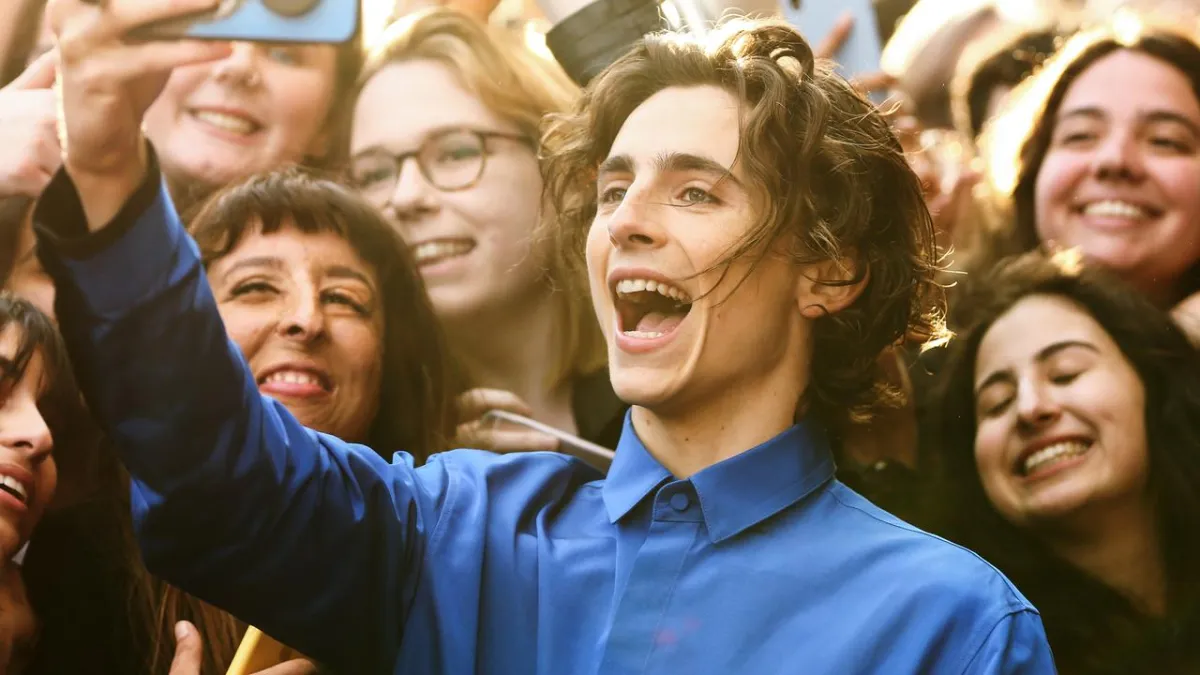 Photo: Timothée Chalamet, via content.api.news
But then there are the examples that strain credulity a little more. When a star with a decades-long career and a very well-compensated representation team claims they "weren't sure" about a role that was clearly tailored for them, that was announced with their name attached before production even began, and that came with a salary in the eight-figure range — the "almost said no" framing requires a certain suspension of disbelief that even the most devoted fans might struggle with.
The Smarter Read on What's Actually Happening
Here's the thing, though: even if the "I almost passed" story is partly constructed, it's worth asking what it's constructed from. Because the most effective celebrity narratives are always built on at least a kernel of genuine experience.
Actors do have doubts. Musicians do second-guess themselves. The decision to take a role that will consume two years of your life is genuinely high-stakes, regardless of how famous you are. The ambivalence is real, even if the emphasis placed on it in a press tour context is strategic.
What the "undersell era" actually reveals is something more interesting than simple dishonesty: it reveals how sophisticated the celebrity image machine has become at identifying and deploying authentic emotional experience in service of a larger narrative goal. The doubt was real. The story being told about that doubt has been edited, shaped, and timed for maximum impact.
Which means the next time your favorite A-lister tells you they almost didn't take the role that made them a household name, the correct response is probably somewhere between "I completely believe you" and "I see exactly what you're doing here, and I respect it."
What to Watch For Going Forward
The undersell trend shows no signs of slowing down. If anything, as audiences become more media-literate and more skeptical of overt self-promotion, the strategic deployment of humility is only going to become more refined. Watch for the evolution of the format: instead of "I almost said no," expect more "I had to fight to understand why I was saying yes" — a subtler version that achieves the same effect while feeling slightly more psychologically credible.
Also watch for the backlash. Gen Z audiences, in particular, have demonstrated a remarkably sensitive radar for inauthenticity, and there's a growing cultural conversation about whether the performative modesty of the celebrity press circuit has finally jumped the shark. A few high-profile cases where the "I almost passed" story was visibly contradicted by reported facts have already generated significant social media skepticism.
The celebrities who navigate this moment best will be the ones who find a way to be genuinely honest about ambition — who can say "I wanted this, I worked for this, and I'm proud of it" without the audience flinching. That's a harder needle to thread than it sounds. But when someone manages it, it tends to be considerably more memorable than the hundredth version of "I almost didn't take the call."
In Hollywood, the most radical thing you can do in a press tour is just admit you really, really wanted it.