Escape Artists: The Hollywood Stars Who Broke Out of Their Box — and Never Looked Back

Hollywood has always loved a label. You're the rom-com queen. The action guy. The funny one. The kid from that thing. Once the industry slaps a sticker on you, it tends to stay — sometimes for a decade, sometimes for an entire career. But every so often, a star engineers something close to a full perception jailbreak, and the results are so good that audiences genuinely forget the box ever existed. This is the story of those escapes — and the very specific, very deliberate moves that made them possible.
The Box Is Real, and It's Expensive
Typecasting isn't just an annoyance — it's a financial architecture. When a studio greenlights a project, they're essentially betting on a known quantity. That's why casting directors reach for the same names in the same genres over and over again. It's not laziness, exactly. It's risk management dressed up as creative vision.
The problem? The box that makes you bankable at 25 can quietly suffocate your career by 40. And the stars who figured that out early are the ones who made the most interesting moves.
Adam Sandler is maybe the defining case study of this generation. For years, he was the patron saint of lowbrow comedy — Happy Gilmore, Billy Madison, a string of Netflix deals that critics treated like a public health concern. Then came Uncut Gems in 2019, and the conversation flipped overnight. His performance as Howard Ratner — a gambling-addicted jeweler spiraling toward catastrophe — was so raw, so genuinely terrifying, that critics who had spent years dismissing him were suddenly writing think-pieces about whether he deserved an Oscar. He didn't get nominated, which remains one of the more baffling snubs in recent Academy history, but the pivot worked. The box cracked open.
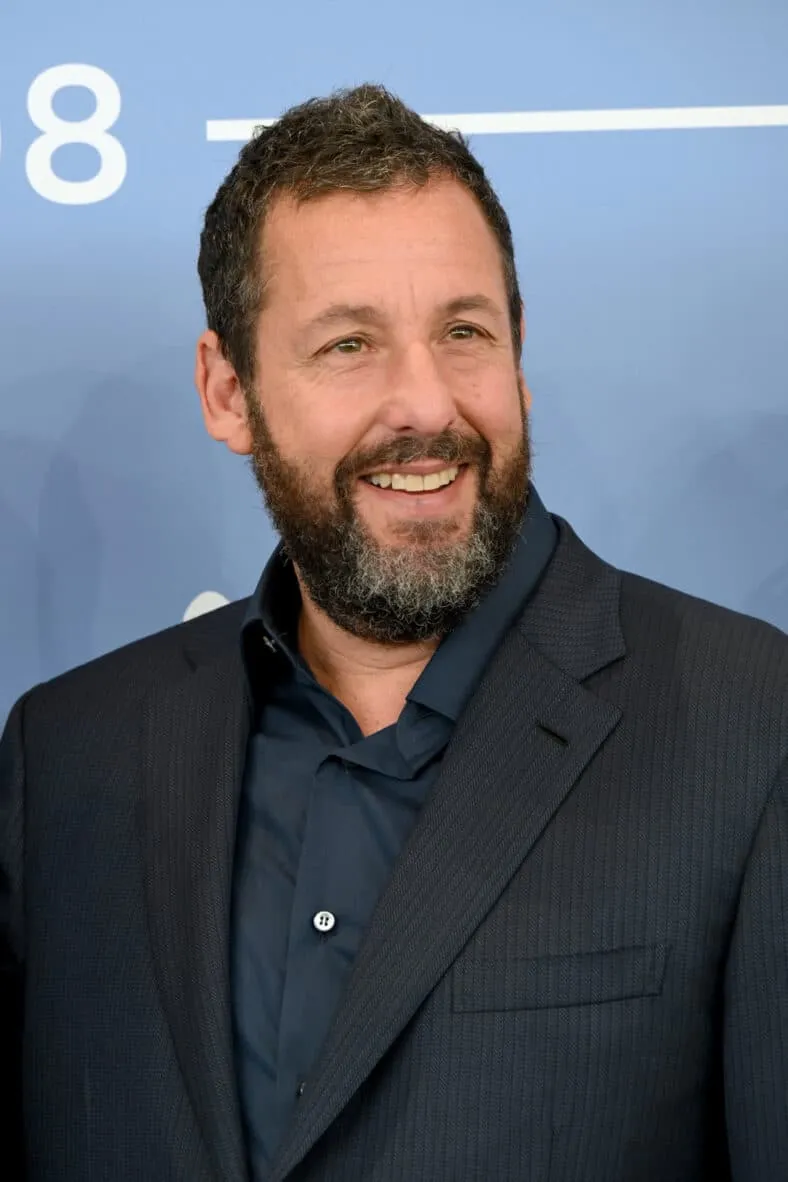 Photo: Adam Sandler, via media.theblast.com
The Strategic Pivot vs. The Lucky Break
Not every typecast escape is a masterclass in career planning. Some are genuinely accidental. But the ones that stick tend to share a few common threads.
Take Matthew McConaughey. By the mid-2000s, he had become so synonymous with shirtless romantic comedies that McConaissance — the term coined when he started doing serious work — entered the cultural vocabulary as its own phenomenon. The pivot wasn't instantaneous. It was a series of deliberate nos. He turned down rom-com after rom-com, took a pay cut to do smaller dramatic work, and waited. The Lincoln Lawyer, Mud, Dallas Buyers Club, True Detective — each project layered on a new dimension until the old image was practically unrecognizable. He won the Oscar in 2014. The rom-com guy was gone.
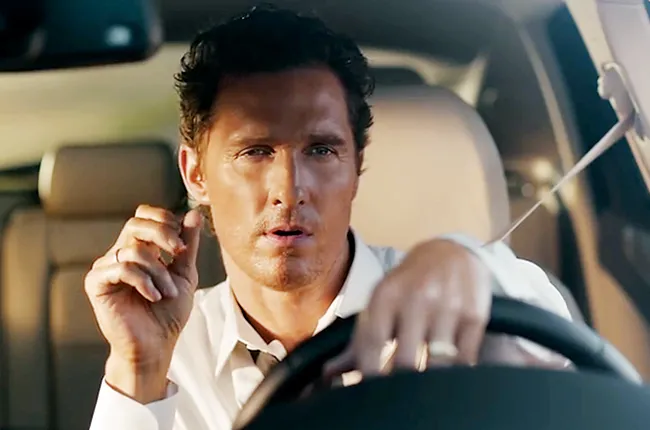 Photo: Matthew McConaughey, via www.billboard.com
Dwayne Johnson has been playing a longer game with arguably messier results. He escaped the wrestling ring, conquered action blockbusters, and then spent years trying — with mixed success — to signal that he had more range than a very large man punching things. His more dramatic turns have been received with warmth but rarely awards-season heat. The jury is still out on whether that particular box has fully broken, or just gotten slightly larger.
The Genre Hop That Changed Everything
Sometimes the escape isn't about going dramatic — it's about going somewhere nobody expected at all.
Robin Wright spent the better part of two decades being "the woman from Forrest Gump." A supporting role in one of the most beloved films ever made is a gift, obviously, but it can also function like a very pretty prison. Her transformation into Claire Underwood on House of Cards — cold, calculating, morally ruthless — was so complete that audiences practically needed a moment to recalibrate. She won a Golden Globe. The show became a cultural event. And Wright, suddenly, was a leading woman of a very different kind.
 Photo: Robin Wright, via www.spootviral.com
Anne Hathaway went through a version of this too, though hers was more about public persona than role type. After years of being perceived as relentlessly earnest — a quality the internet briefly decided to hate her for, in one of pop culture's more inexplicable pile-ons — she leaned into the villain energy in The Witches, played a complicated antihero in WeCrashed, and generally stopped trying to be likable on anyone else's terms. The internet, naturally, decided she was great again.
What the Industry Actually Responds To
Insiders will tell you that the casting pivot is almost never just about talent. It's about access and timing and who's in the room. A star who wants to break their type needs a director willing to take the bet — and those directors usually need a reason to believe the risk is worth it.
For Sandler, it was the Safdie Brothers, who saw something in him that the industry had filed under "comedy." For McConaughey, it was a string of independent directors who weren't beholden to his commercial image. For Wright, it was David Fincher, who apparently doesn't care what box anyone's been put in.
The lesson, if there is one: the escape rarely happens in a vacuum. It usually requires one very specific creative collaborator who sees the actor differently — and the courage to say yes to less money, less visibility, and a whole lot of "are you sure about this?"
The Ones Still Trying
For every McConaughey, there's a star still mid-pivot, still waiting for the project that cracks the ceiling. Jennifer Lopez has spent years oscillating between serious actress and pop cultural force of nature, with her performance in Hustlers representing the closest she's come to a full critical reappraisal — only for the moment to slip away before it fully solidified. Her 2024 has been, by most accounts, a complicated chapter, which makes the next move all the more interesting to watch.
Zac Efron went from High School Musical heartthrob to serious dramatic contender with The Greatest Showman, Neighbors, and Extremely Wicked, Shockingly Evil and Vile — but the public still sometimes seems surprised when he's good, which is its own kind of typecasting tax.
The box is hard to break. But the stars who manage it don't just change their careers — they change what audiences think is possible. And that, in an industry built on predictability, might be the most radical act of all.
The real plot twist? The box was never locked — some stars just needed the right director to hand them the key.