Caught Off Guard, On Schedule: How Celebrities Beat the Paparazzi at Their Own Game
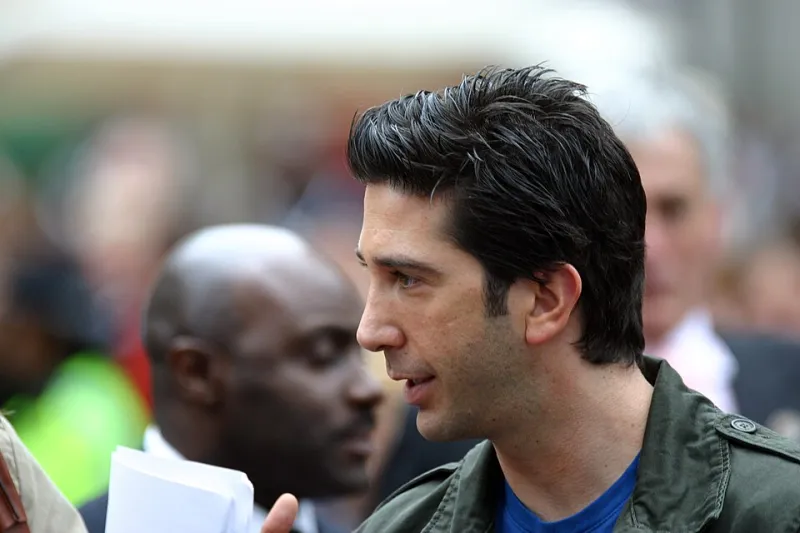
Photo: Jason Broersma from Milton, Ontario, Canada, CC BY 2.0, via Wikimedia Commons
There's a certain kind of photograph that used to mean something: the blurry long-lens grab of a star in gym clothes, hair undone, holding a green juice, looking like they'd rather be anywhere else on earth. That image was the engine of an entire industry — wire services, tabloid photo desks, freelance stringers living out of their cars in the hills.
That engine has largely stalled. And the reason is not privacy laws or decency or a sudden collective change of heart. It's that the celebrities figured out they could sell the shot themselves.
The economics broke first
The street-photo trade ran on scarcity and timing. If you were the only photographer at the right corner at the right moment, you had a product. Photo desks paid for that exclusivity, tabloids paid for the print run, and everyone downstream paid a licensing fee.
Then print collapsed, page views got cheap, and the phone in every pocket became a competing newsroom. A licensed long-lens set that once fetched real money now competes with a grainy fan video shot from a car window, posted free, and reposted four hundred times before the agency's invoice goes out. The middle of that market simply evaporated.
What survived is the top and the bottom. At the top, a handful of agencies still land genuine gets. At the bottom, an entire ecosystem of hobbyists and semi-pros who will hand over an image for credit and a follow. The professional stakeout photographer — the guy with the folding chair and the thermos — is a vanishing species, and he is not sentimental about it in interviews.
The candid shot got a call time
Here's the part that changed the game: celebrities stopped being the subject of the photo economy and became its distributors.
A star's own Instagram post is, functionally, an exclusive. It's better lit, better framed, better captioned, and it comes with zero licensing fees for the fan edit accounts that will have it up in nine minutes. Why would a team chase a tabloid placement when the grid does the job for free and on brand?
Which is also why so many of the "candid" shots that still circulate look suspiciously well-composed. A coffee run with a perfect angle, a beach walk where the light is doing something cinematic, a gym exit photographed from a distance that suggests a photographer who somehow knew the door. Fans have gotten very good at spotting the tells — the reused outfit, the coordinated friend, the shot that appears in three outlets simultaneously with identical framing.
None of that is illegal, and most of it isn't even unethical. It's just a market working as markets do. The product became the control of the product.
The consent conversation moved
The one area where the ethics genuinely tightened is kids. This is not new territory in California, which spent the early 2010s legislating around exactly this. In 2013, Halle Berry and Jennifer Garner both testified in Sacramento in support of legislation aimed at protecting the children of celebrities from photographer harassment — a moment that, at the time, looked like a celebrity press stunt and now reads as genuinely ahead of the curve.
A decade later, the norm has shifted further than the statute. Several outlets and major agencies now have internal policies against unsolicited images of minors, and platforms have gotten more aggressive about removing them on parental request. The audience changed too: a photo of somebody's eight-year-old at a school pickup does not generate engagement anymore. It generates outrage at the person who posted it.
That's a real, measurable improvement, and it happened because the economics of being decent finally caught up with the ethics of it.
The cost of a world without accidents
But there's a loss buried in all this, and it's worth naming. The genuinely unscripted image — the one where a person wasn't ready, wasn't lit, wasn't performing — used to be the closest thing the culture had to honesty about fame. Some of those photos were cruel. Some were exploitative. But some of them were the only proof that the machine has a human inside it.
Now almost everything is either official or arranged, and the audience knows it. That's part of why the "staged candid" accusation has become the default response to any celebrity photo. The skepticism is earned, but it's also a little sad. Everyone's performing, everyone assumes everyone's performing, and the one thing you can't stage — the moment of surprise — has gotten genuinely rare.
What happens next
Watch the agencies. The survivors are pivoting from street work to talent-adjacent content — branded shoots, behind-the-scenes access, the kind of thing that requires a relationship rather than a long lens. That's a fundamentally different business, and it means the people who control the access are now the people who used to be the adversary.
Which, if you think about it, is the funniest possible ending. The paparazzi spent fifty years chasing celebrities around Los Angeles. In the end, they didn't get the shot. They got the job.
Somewhere in the hills, a photographer is waiting for a text with a time and an address, and he's calling it an exclusive.