Ninety Seconds to Judgment: How the Teaser Trailer Became Hollywood's Real Opening Night
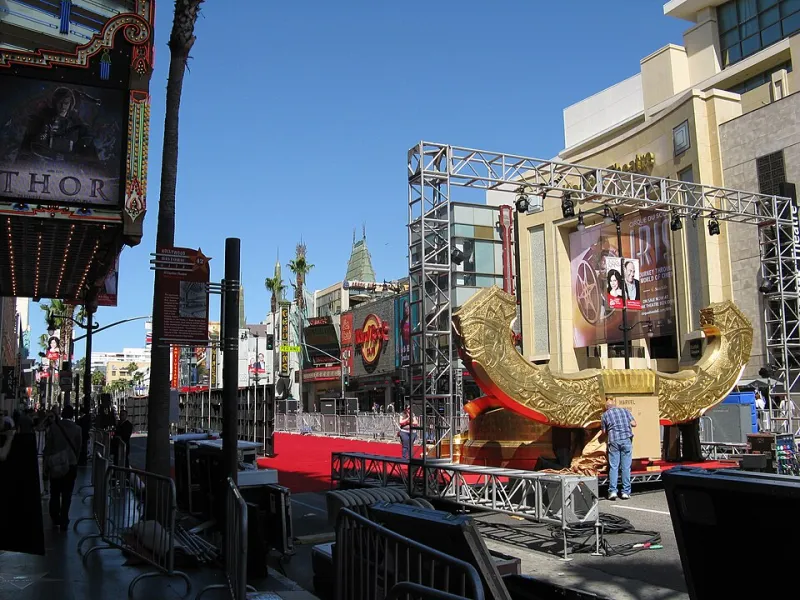
Photo: Alen Ištoković, CC BY 3.0, via Wikimedia Commons
There is a version of the movie business that still runs on premieres, junkets, and a well-timed couch appearance. Then there is the version that actually exists in 2026, where a $200 million film can be anointed a classic or pronounced dead on a Tuesday afternoon because a teaser went live at 9 a.m. and the internet was handed ninety seconds to make up its mind.
That's not an exaggeration for effect. It's the release calendar now. The trailer drop is the new opening night, the first box office number is a view count, and the reviews that matter most are filmed in a bedroom with a ring light and a face that goes from neutral to screaming in four seconds.
The verdict arrives before the movie does
Here's the sequence, and if you've been online at all in the past few years you've watched it play out in real time. A studio drops a teaser. Within an hour, the frame-by-frame accounts have posted twenty-slide breakdowns with arrows pointing at things that may or may not be clues. Within three hours, the reaction channels have uploaded thumbnails of themselves with their mouths open. Within six, someone has decided the CGI looks unfinished, and that opinion has been screenshotted, quote-tweeted, and laundered into something that sounds like consensus.
By day two, the narrative has hardened. The film is either "already a classic" or "dead on arrival," and the actual movie — the one nobody has seen — has become irrelevant to the conversation about it.
What's changed isn't that people judge movies early. Audiences have always done that. What's changed is that studios now build their entire marketing spend around the judgment rather than the movie. Trailers are cut for the pause button, not the theater. Beats are placed for the clip that will circulate without context. The two-minute tease isn't a sample of the film anymore; it's the product, and the film is the merchandise tie-in.
The reaction video is the real target audience
Ask anyone who works in trailer marketing and they'll tell you the same thing, usually with a slightly haunted look: the goal is no longer to sell the movie to a person. It's to sell the movie to a person who is about to watch somebody else react to the movie.
That's why teasers now front-load their biggest image in the first eight seconds. That's why the music cue is a recognizable needle drop instead of an original score. That's why the title card lands at 1:45 instead of 2:30. Every one of those choices is engineered for the edit, the duet, the stitch, the "watch till the end" of it all.
Studios have gotten blunt about it. Creator screenings and early clip access for edit accounts have become standard practice, and the line between "fan-made" and "quietly facilitated" has gotten genuinely blurry. When a twenty-second fan edit outperforms the official spot on views, nobody in the room is calling it a coincidence.
When the internet actually rewrites the movie
The uncomfortable truth for anyone who insists online discourse doesn't matter: sometimes it does, and the receipts are in the history books.
The 2019 Cats trailer became a global punchline within hours, and the film that reached theaters had visibly different visual effects work than the one in that first tease — a re-render that happened at speed and, by most accounts, not fast enough. The original Sonic the Hedgehog trailer a few months earlier triggered such a loud and specific backlash about the character design that the studio delayed the film and rebuilt it entirely. That one worked. The redesign was praised, the movie opened well, and the whole episode became the industry's favorite example of listening to the internet.
But here's the part that gets skipped: for every Sonic, there are a dozen films that got pre-judged on a teaser and never recovered, and a handful more that got pre-crowned and then couldn't clear the bar the trailer set. The internet is a great hype machine and a terrible projectionist.
The star in the middle
Which brings us to the actual humans doing the press tour.
Imagine spending four months shooting something in the rain in Budapest, then spending six weeks being asked on camera whether you're aware that people think the trailer looks cheap. That's the gig now. Actors get handed the discourse on a platter — the de-aging debate, the wig discourse, the "is that a Whataburger cup in the background" mystery — and are expected to have a charming, quotable answer that doesn't sound defensive and doesn't go viral for the wrong reason.
The smart ones lean in. They post the memes themselves. They answer the fan theories with a wink. They understand that the ninety-second version of their movie now has a longer press tour than they do.
What to watch for
The next phase of this is already forming, and it's uglier than the trailer wars. With tracking data now heavily influenced by teaser sentiment, studios are testing marketing cuts with small online audiences the way they once tested endings with focus groups. Which means the thing you're reacting to may have already been tuned to your reaction.
And that's the trap, isn't it? The more the marketing learns to predict your verdict, the less that verdict tells you anything at all.
The trailer ate the movie. Somebody should probably check on the movie.