The Screenshot Always Survives: How a Single Saved Image Became Celebrity Culture's Most Feared Weapon
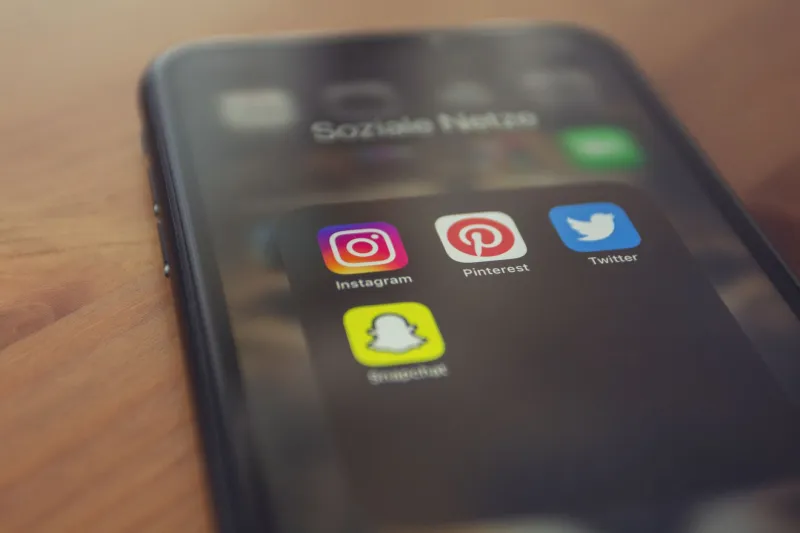
There's a moment — and if you've spent any time on entertainment Twitter, Instagram, or TikTok, you've witnessed it dozens of times — where everything a celebrity has carefully built in the public eye starts to wobble. Not because of a new scandal. Not because of anything that happened this week. Because someone, somewhere, opened their camera roll and found something from four years ago that suddenly matters very much.
The screenshot has become the entertainment industry's great equalizer. It doesn't care about publicists. It doesn't respond to cease and desist letters. It doesn't forget, and it doesn't forgive — and it has reshaped celebrity culture more profoundly than almost any other development of the social media era.
The Archive Economy
Let's start with the infrastructure, because it's genuinely remarkable.
There exists, across the internet, a distributed and entirely informal archive of celebrity behavior stretching back to the early days of social media. Fan accounts, stan communities, and dedicated internet archaeologists have been screenshotting, saving, and cataloguing celebrity posts, tweets, comments, and DMs for well over a decade — not always with a specific purpose in mind, but with the vague and apparently correct instinct that documentation has value.
The result is a shadow record of public behavior that no PR team has full visibility into. A celebrity can delete a tweet within seconds of posting it. They can archive an Instagram post, scrub a Facebook page, or abandon an old username entirely. But if anyone saw it — and someone almost always saw it — the screenshot already exists on a hard drive somewhere, waiting.
This is not theoretical. The pattern plays out with enough regularity that it has its own established rhythm. Celebrity says something controversial, deletes it, moves on. Months or years later, a news cycle opens up that makes the deleted content relevant again. The screenshot surfaces. The narrative shifts. The celebrity is now responding to something they thought they'd successfully buried.
The Contradiction Trap
One of the screenshot's most powerful functions isn't exposure of something new — it's exposure of something old that directly contradicts something current.
This is the contradiction trap, and it has claimed some significant reputations. A celebrity who builds a public brand around a specific value system — environmental advocacy, body positivity, anti-consumerism, social justice — creates a very particular vulnerability: every past statement or action that conflicts with that brand becomes a potential receipt.
The more loudly a public figure performs a set of values, the more damaging the contradiction when it surfaces. Audiences are, in general, fairly forgiving of hypocrisy in people who never claimed otherwise. They are considerably less forgiving when someone has built a career, a book deal, or a lifestyle brand on the back of a specific moral position and then gets caught having said or done the opposite.
This is why some publicists and communications strategists have begun advising clients to be significantly more careful about the language of moral certainty in public statements — not because the values are wrong, but because the archived record is long, and certainty has a way of aging poorly.
The DM as Evidence
If the screenshot is the currency of this economy, leaked direct messages are the high-denomination bills.
DMs occupy a specific and uncomfortable space in the receipts ecosystem. Unlike public posts, they were sent with an expectation of privacy — which makes their exposure ethically complicated and legally contested in some cases. But they also tend to contain the most unguarded, unmediated version of what a person actually thinks, which is precisely why they're so devastating when they surface.
The most high-profile DM leaks of recent years have shared certain characteristics: they tend to involve celebrities who had cultivated a very specific public persona, and the private messages tend to reveal a version of that person that is sharply at odds with the public one. The gap between the two is where the story lives.
The 'I was hacked' defense, once a passable first response to compromising digital content, has been so thoroughly used and so rarely substantiated that it now functions as a near-universal signal that the content is genuine. At this point, audiences read 'I was hacked' approximately the way they read 'sources say we're just friends' — as confirmation of the thing being denied.
The Sleuths Who Made It a Vocation
Behind every major receipt drop is usually a person — or a small, loosely organized community of people — who made it their business to pay attention.
The internet investigator has become a genuine cultural archetype. These are not, for the most part, professional journalists. They're people who became interested in a specific celebrity story, started documenting, found that their documentation attracted an audience, and gradually developed something resembling a methodology.
The best of them are careful. They distinguish between what they can verify and what they're speculating about. They timestamp their findings. They cross-reference. They are, in some cases, doing better sourcing work than outlets with actual budgets — which is either an inspiring testament to the democratization of information or a fairly damning commentary on the current state of entertainment journalism, depending on your mood.
The worst of them are not careful, and the collateral damage from bad-faith receipt culture — where screenshots are selectively cropped, decontextualized, or occasionally fabricated — is real and worth acknowledging. The weapon cuts in multiple directions.
Why the 'Context' Defense Rarely Works
When a receipt lands, the celebrity response almost always involves some version of context: the post was taken out of context, the DM was edited, the full conversation tells a different story.
Sometimes this is true. Genuinely. The internet's appetite for receipts occasionally outpaces its patience for nuance, and there are cases where the full context genuinely does change the meaning of what's been shared.
But the context defense has a credibility problem, which is that it has been deployed so many times in cases where the full context was subsequently provided and the situation was, in fact, exactly as bad as it looked. Audiences have been burned enough times that the burden of proof for the 'you don't have the full picture' argument is now extremely high.
If the screenshot is clear, if the timestamp is verified, and if the content is unambiguous — the context defense doesn't just fail to help. It sometimes makes things worse, because it signals that the celebrity's first instinct was to dispute rather than acknowledge.
The Preemptive Confession
The most interesting recent development in receipt culture is the preemptive acknowledgment — the celebrity who gets ahead of a potential screenshot by addressing their past behavior before it surfaces.
This strategy has had mixed results. When it works, it works because it demonstrates self-awareness and removes the element of exposure from the equation. If you've already told the story, the screenshot becomes corroboration rather than revelation, and corroboration is significantly less dramatic.
When it doesn't work, it's usually because the preemptive acknowledgment was too vague, too carefully worded, or too obviously strategic — which prompts the internet to go looking for exactly what it was designed to cover, and to find it.
What to Watch For
The receipts economy will keep evolving. As celebrities become more guarded about their digital footprints — more careful about what they text, post, or say in any documented context — the value of older, less carefully managed archives only increases. The stuff from 2012, before anyone fully understood that the internet was forever, is still out there.
Somewhere right now, a fan account is sitting on a screenshot that hasn't mattered yet. It will matter eventually. It always does.
Delete all you want — the internet's long-term memory is considerably more reliable than your publicist's optimism.