One Unfollow to Rule Them All: How Celebrity Instagram Activity Became the New Tabloid Front Page
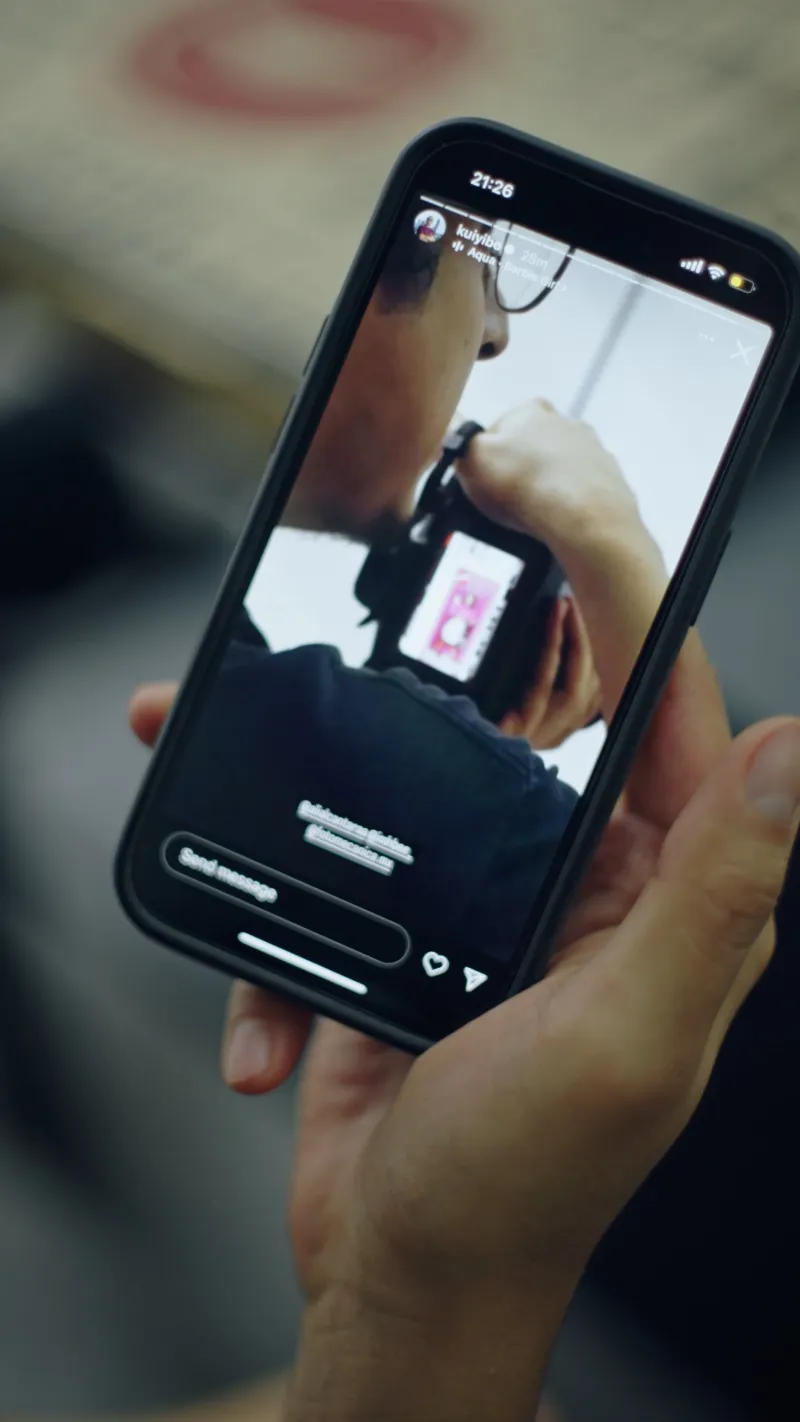
Photo: person scrolling Instagram phone close up, via images.pexels.com
It starts with a number. Not a headline, not a leaked text, not a paparazzi shot — just a follower count that's gone down by one. And somehow, within hours, it becomes the most-discussed celebrity story on the internet.
Welcome to the era of social media forensics, where fans have collectively appointed themselves as unpaid digital investigators, and where the smallest gesture on Instagram — a like removed, a tag deleted, a Story viewed or conspicuously not viewed — is treated as breaking news. And the wild, slightly unsettling thing? They're often right.
The Science (Yes, Science) of the Celebrity Unfollow
To understand why this phenomenon has taken such deep root, you have to appreciate just how sophisticated fan communities have become at tracking celebrity social media activity. There are dedicated accounts — some with hundreds of thousands of followers — that do nothing but monitor who celebrities follow and unfollow in real time. There are browser extensions designed specifically to track Instagram follow changes. There are Reddit threads with timestamp-precise records of when a mutual follow between two celebrities quietly ceased to be mutual.
This isn't casual scrolling. This is infrastructure.
And it works because celebrities, despite having entire teams managing their public image, are still human beings who occasionally let their actual feelings bleed into their digital footprint. An unfollow is a decision. It requires action. And unlike a subtweet or a vague Instagram caption, it's binary — they either follow someone or they don't. There's no plausible deniability in a follow count.
The Cases That Made Believers Out of Skeptics
If you need proof that this community of social media sleuths is onto something real, the receipts are extensive.
When Selena Gomez and Francia Raisa's friendship appeared to cool following Raisa's kidney donation — a narrative that played out almost entirely in unfollows, re-follows, and conspicuously absent birthday posts — fans tracked every digital breadcrumb before either party addressed the situation publicly. The online timeline of their apparent falling out, pieced together entirely from social media signals, turned out to be remarkably accurate once the story eventually surfaced.
Similarly, when Taylor Swift's inner circle shifts — and if you follow celebrity culture at all, you know this is a subject that could fill a graduate thesis — fans have consistently mapped the changes through social media activity weeks before any confirmation arrives. Mutual follows disappearing between Swift and former collaborators or friends have historically been reliable leading indicators of real-world distance. The Swiftie community in particular has elevated this practice to an almost academic level, maintaining spreadsheets and cross-referencing activity across platforms.
The Kardashian-Jenner universe is another particularly rich data set. Given the family's total domination of social media and the complexity of their interpersonal relationships, any change in their follow patterns sends ripples through entertainment media almost immediately. When Khloé Kardashian unfollowed and re-followed Tristan Thompson multiple times during various stages of their relationship, fans had the timeline documented before any official statement was issued.
Why This Actually Makes Psychological Sense
There's a reason this behavior feels almost irresistible, and it's not purely about nosiness (though, let's be honest, some of it is about nosiness). Celebrity culture has always been built on parasocial intimacy — the sense that we know these people, that we're invested in their lives. Social media accelerated that feeling dramatically. These aren't just stars we watch on a screen anymore; they're people whose lunch we see, whose vacations we follow, whose relationships we watch unfold in real time.
So when the signals go dark — when the posts stop, when the tags disappear, when the follower count drops — it creates a narrative vacuum that fans feel compelled to fill. And filling it requires detective work.
Dr. Crystal Abidin, a researcher who studies influencer culture, has written extensively about how audiences develop "calibrated amateurism" — a sophisticated literacy around the conventions of social media that allows them to read between the lines of even highly managed public personas. In plain English: fans have been watching long enough to know what normal looks like, which means they also know when something's off.
The False Positives (And Why They Matter Too)
Not every celebrity unfollow is a declaration of war. Sometimes Instagram glitches. Sometimes accounts get accidentally unfollowed during a phone update. Sometimes a celebrity cleans up their following list for algorithm reasons that have nothing to do with interpersonal drama.
But here's the thing — even the false positives reveal something interesting. The speed with which an accidental unfollow can generate a full-blown conspiracy theory tells us just how primed audiences are for celebrity conflict. We are, culturally, waiting for the drama. The unfollow just gives us a starting gun.
And celebrities know this. Which means some of them — and this is where it gets genuinely interesting — have started using social media activity strategically. A well-timed follow can signal a reconciliation before any public statement. A calculated unfollow can send a message to someone without requiring a word to be said publicly. The platform has become a communication channel that operates in a language only the most fluent fans can read.
What Happens Next
As platforms continue to evolve — and as celebrities become increasingly aware of who's watching their follow counts — expect this dynamic to get more complicated, not less. Some stars have already started using private or secondary accounts to avoid scrutiny. Others have leaned into the surveillance, using strategic social media moves as a form of narrative control.
But the fans will adapt. They always do. Because at this point, celebrity social media forensics isn't a hobby — it's a competitive sport.
The real question isn't why fans track every unfollow — it's why celebrities keep giving them something worth tracking.